
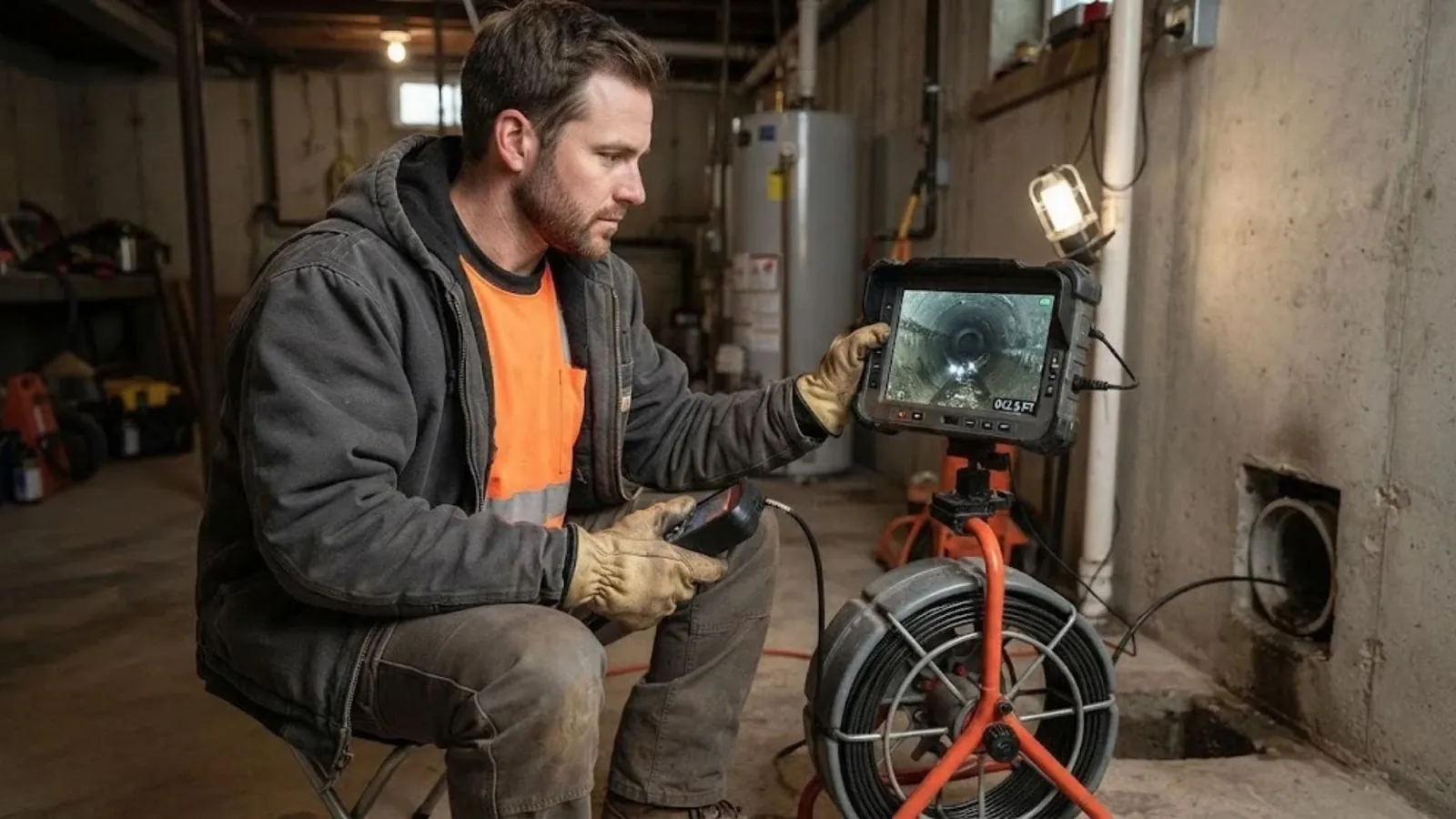
Why Cast Iron Pipe Fails
Inside, cast iron rusts and builds scale called tuberculation, which narrows the pipe and catches debris. Outside, soil moisture and corrosive conditions eat at the metal. Over decades, the wall can thin until it cracks, splits or collapses.
Cast iron is brittle, so a sagging section or a shifting foundation can crack it. Joints sealed with lead and oakum can leak.
Slow drains throughout the house
Scale has narrowed the pipe.
Recurring clogs
Rough walls catch debris.
Sewer odor
Cracks or leaking joints.
Rust stains or dampness near the pipe
Corroded wall leaking.
Pipe sounds hollow or flaky when tapped
Deep corrosion.
How Repair Is Decided
A camera inspection tells us the condition. A localized crack calls for a spot repair. Widespread scaling may need lining, which inserts a new resin pipe inside the old one. A badly corroded or collapsed pipe needs replacement.
We show you the video so you see what we see before you decide.
| Method | When it fits | Relative cost |
|---|---|---|
| Spot repair with a coupling | Single crack or leak | Lower |
| Section replacement | A damaged length | Medium |
| Trenchless lining | Long runs, sound alignment | Medium to high |
| Full replacement | Widespread failure or collapse | Highest |
How Cast Iron Was Joined and Why Joints Leak
Older cast iron used bell and spigot joints sealed with oakum and molten lead. Over decades the lead can crack and the oakum rots, leaving a joint that weeps. Newer cast iron uses no-hub couplings with rubber gaskets and steel bands, which can loosen or corrode.
A leak at a joint is often cheaper to fix than a failing pipe wall, because a coupling or new section of pipe can replace just the bad part.
Cast Iron Inside the House Versus Under the Yard
Inside a home, cast iron stacks and branch lines run through walls and basement ceilings. Repair means opening walls or ceilings, so access and finish repair affect the price as much as the plumbing does.
Under the yard or driveway, the cost depends on depth and surface. A deep line under concrete costs more to reach than a shallow one under lawn.
Questions to Ask Before You Sign
Can I see the camera recording?
A reputable contractor shows you the defect.
What method are you recommending and why?
The reason should match what the camera showed.
What does the price include?
Permits, restoration and cleanup should be named.
What warranty comes with the work?
Ask for it in writing.
Planning the Money Side
Large pipe repairs rarely fit neatly into a month's budget. Ask whether a staged approach is possible, such as repairing the failed section now and scheduling the rest. Some owners finance the work or use a home equity line.
Keep the camera recording and the written quote together. If you sell the house later, a documented repair is a plus, and a buyer's inspector will be glad to see it.
Warning Signs That a Cheap Fix Will Not Last
Widespread scale along the whole run
A patch fixes one spot, but the rest of the wall is thin.
A belly that holds water
Debris will keep settling there.
Multiple cracks on the video
Failure is spreading, and a liner or replacement is likelier to be worthwhile.
Offset joints
The pipe has shifted and will keep catching debris.
Questions to Ask Before You Approve Any Quote
Ask whether the price covers opening and closing the wall or floor, and who pays for a permit if one is needed. Ask what happens if the camera shows more damaged pipe than expected.
A clear quote lists the length of pipe, the material going in and what is left for you to finish. Vague quotes are where surprise charges come from.
Keep any photos of the pipe, the camera footage and the written quote together. If you sell the home later, a buyer's inspector may ask what was done and when.
Want a repair priced?
Call and tell us about the pipe. We will book a camera look and give a written price.
What Drives the Price
Length
A 10 foot repair costs far less than a 60 foot run.
Depth and access
Under a slab or finished basement costs more than an open crawl space.
Method
Spot repair, lining and replacement carry different labor and material costs.
Restoration
Concrete, flooring and landscaping add to the total.
Permits
Fees and inspections are part of the job.
Typical US prices for cast iron drain repair commonly range from about $1,000 for a small spot repair to $10,000 or more for long replacements, and an under-slab job can cost more. Treat any number without a camera as a guess.
Ways to Avoid Overpaying
Get a written scope that names the method, length and restoration. Ask for the camera recording and a second opinion on a large job. Be wary of a quote that pushes full replacement without showing a defect.
Ask whether lining will fit the pipe. A belly or a major offset in the old pipe will not be cured by a liner.
We inspect and repair in Chaska, Carver and Chanhassen. A sewer inspection is the starting point, and the fix may be sewer line repair or a drain cleaning to buy time.
Who Pays for What in Chaska
The City of Chaska states that the sewer service line from your property to the City's main is the property owner's responsibility. That includes the cast iron or clay pipe on your lot.
Before digging, call Gopher State One Call at 651-454-0002. Check any contractor's license on the Minnesota Department of Labor and Industry's free online lookup, and ask about permits before work begins.
Source: City of Chaska sewer service line guidance, Minnesota DLI license lookup.
Questions Chaska Homeowners Ask
Often 50 to 100 years, depending on conditions.
Yes, if the alignment is sound. A liner cannot fix a belly or a collapse.
Gradual wear is usually excluded. Sudden damage may be covered.
Spot repairs take a day. Lining and replacement can take several days.
Often yes, and we handle it.
Only if the camera shows widespread failure. Otherwise repair what is bad.