
High Water Bill or Spinning Meter: Test It Yourself First
Turn off every faucet, the ice maker and the irrigation system, and make sure no one runs a toilet. Read the water meter, wait two hours with no water use, then read it again. If the numbers moved, water is leaking somewhere after the meter.
If the meter did not move, the leak may be intermittent. A toilet that refills every few hours is one example. The high bill may also come from use, not a leak. A dye tablet in each toilet tank, left for 15 minutes, catches silent toilet leaks.
Check the meter
A two hour no-use reading separates a real leak from a billing question.
Isolate the zone
Closing the main at the house tells us whether the leak is inside or on the service line outside.
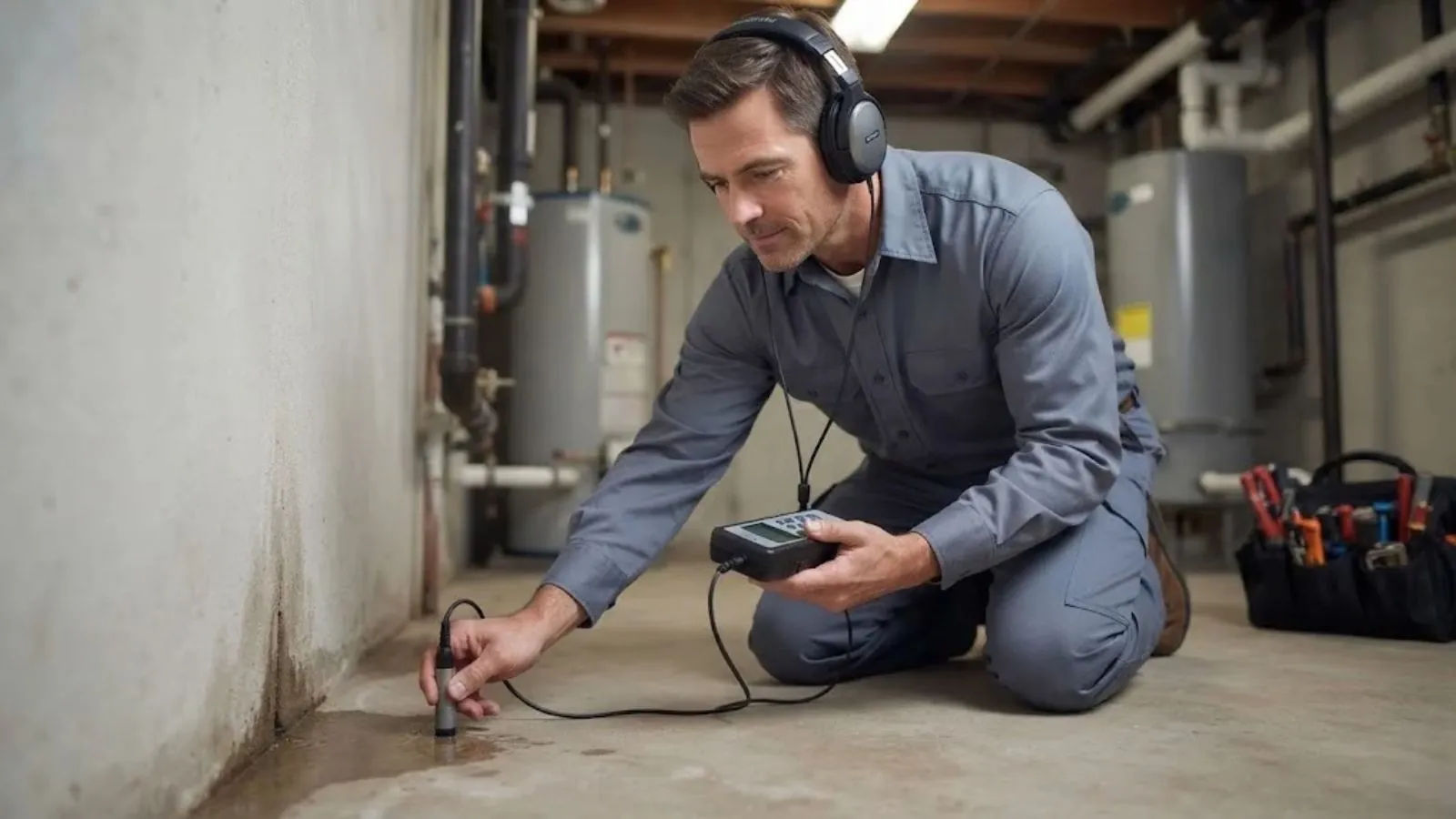
Listen and trace
Acoustic gear picks up the sound of water escaping pipe. Thermal imaging shows warm water under floors and in walls.
Mark and explain
We mark the spot, show you the evidence and give a price for the repair before any opening is cut.
Where Hidden Leaks Show Up
Ceiling or wall stain
A brown ring or bubbling paint often traces back to a supply line, a shower pan or a drain. Water can travel several feet from the source.
Hot spot on the floor
A warm patch under a slab or hardwood can mean a hot water line leak, especially in radiant heated floors.
Musty smell without a visible source
Mildew behind a wall or under a vanity signals slow moisture. Do not wait for the stain to appear.
Hissing in the walls
Pressurized water escaping a pipe makes a faint hiss when all fixtures are off.
Soggy lawn or low pressure
A wet patch in the yard or a drop in pressure at every tap suggests a service line leak outside.
Slab, Crawl Space and Buried Line Leaks
Most Chaska homes sit on basement foundations, so slab leaks are uncommon and mostly show up in additions, garages and some townhomes. When they occur, we locate the leak from above and recommend the least invasive repair, which can mean a reroute through the attic or walls rather than breaking the slab.
Under-house and crawl space leaks are easier to reach and often show as wet insulation or a damp dirt floor. Buried service line leaks between the meter and the house are traced by tracing the line and listening along its route, and they are repaired after a utility locate. See water line repair for the fix.
| Leak location | How we find it | Typical repair |
|---|---|---|
| Behind a wall or ceiling | Moisture meter, thermal camera, acoustic listening | Small opening and pipe section replacement |
| Under a slab | Pressure test and ground microphone | Spot repair or reroute |
| Crawl space | Visual and moisture check | Pipe or fitting replacement |
| Buried service line | Line trace and listening | Excavate and repair, or replace |
| Irrigation line | Zone isolation and pressure test | Replace the damaged section |
Think you have a hidden leak?
Call and describe the meter reading or the stain. We will tell you what the likely source is before we arrive.
What Leak Detection Costs
A leak detection visit is priced as a diagnostic service, often from about $200 to $500 in typical US ranges. The repair is priced separately once the leak is found. A job in a finished wall costs more to repair than an exposed basement pipe. What changes the price:
Many homeowners policies cover the resulting water damage from a sudden leak, and some cover the cost to access the pipe. Slow, long-term leaks are commonly excluded. Ask your insurer before work starts.
Meter Rules and Leak Alerts in Chaska
The City of Chaska recommends checking for a leak by reading the water meter before and after two hours of no water use. The City's metering system notifies customers if it detects water consumption for four consecutive days, which can flag a leak you had not noticed.
Utility Billing handles billing questions at 952-448-9200. Before any digging, Gopher State One Call at 651-454-0002 marks buried utilities. In summer, the City restricts non-essential irrigation from noon to 4 p.m. between May 1 and September 30, which is also a time when irrigation leaks appear as soggy patches.
Repairs after a leak is found follow the Minnesota Plumbing Code, based on the Uniform Plumbing Code (UPC), and pressure tests are done before walls are closed.
Source: City of Chaska utility billing and water conservation pages.
Leak Detection Questions in Chaska
Yes. If water is actively coming through a ceiling or wall, call any time. Close the main shutoff, cut power to affected outlets if you can do so safely, and we will plan the fastest response without promising a fixed arrival time.
Usually only a small opening. We locate the leak first with listening gear, moisture mapping and thermal imaging, so any opening is as small as possible and placed on the leak itself.
Drop a few drops of food coloring into the tank without flushing. If color shows in the bowl after 15 minutes, the flapper is leaking. A leaking toilet can waste many gallons a day.
No. Seasonal irrigation, guests and filling a pool can raise a bill. A two hour meter test tells you whether water is leaking when nothing should be running.
Yes. We isolate zones and pressure test them. Irrigation leaks often show as a spongy lawn patch or a zone that never comes up to pressure.
If you smell gas, leave the house at once, avoid switches and flames, and call 911 and your gas utility from outside. We do not diagnose gas leaks as a plumbing emergency, and we cannot promise a response time for one.