
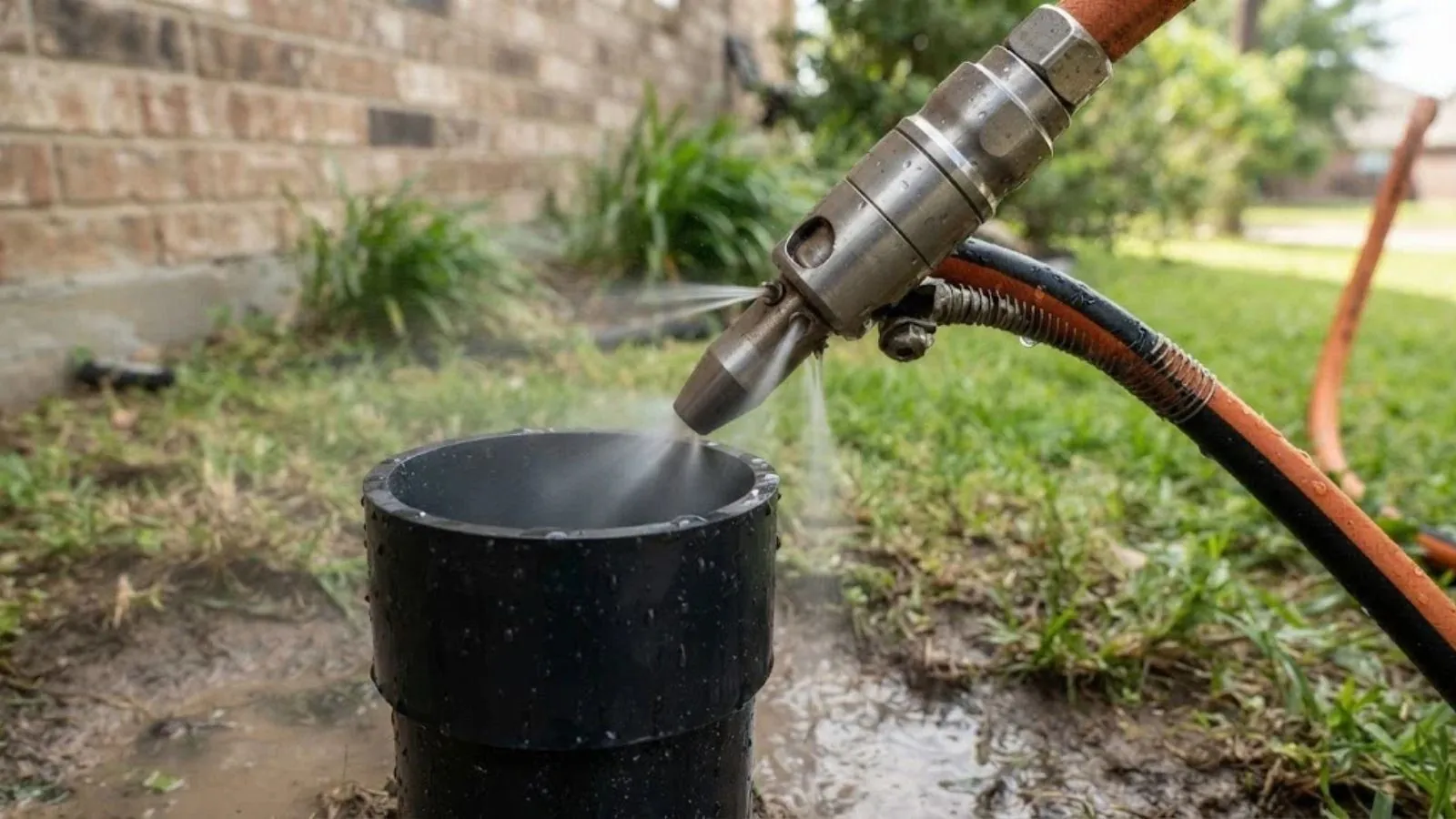
Hydro Jetting Versus Snaking: What Is the Difference
A cable cuts a hole through a clog. A jet scours the whole pipe wall and washes debris down the line. For a one-time hair clog, a cable is the right tool. For recurring grease, scale or root hair, a jet cleans the full pipe.
We use a camera first on any line that has backed up more than once, so we know whether the pipe is sound enough to jet and what we are clearing.
| Cable (snake) | Hydro jet | |
|---|---|---|
| How it works | Cuts a path through the clog | Scours the pipe wall with water |
| Best for | Hair, soap, a single blockage | Grease, scale, roots, recurring clogs |
| Leaves residue | Often some | Little to none |
| Pipe condition needed | Tolerant | Sound pipe, camera first |
What Jetting Clears
Grease and soap film
Kitchen and laundry lines build a coat of grease that narrows the pipe over months.
Mineral scale
Hard water leaves deposits in older iron and steel drain lines.
Root hairs
Fine roots enter at joints and catch paper. A jet cuts them back, though it does not stop them returning.
Sludge in horizontal runs
Slow flowing basement lines collect settled solids that a cable pushes around.
Is Your Pipe Safe to Jet?
Jetting is not for every pipe. Cracked clay, fragile cast iron with deep corrosion and pipes that have collapsed or have offset joints can be damaged by high pressure. A camera shows the condition before we pressure up.
If the camera shows damage, we explain the options and recommend sewer line repair instead of jetting. We would rather tell you no than break a pipe.
Tired of repeat clogs?
Call and tell us how often the drain backs up. We will tell you whether a jet and camera are the next step.
Hydro Jetting Cost
Hydro jetting typically costs more than a cable visit, with typical US prices from roughly $350 to $800 or more depending on line length and access. The camera inspection is priced with it. The price depends on:
Jetting for maintenance is not an insurance claim. A sewer backup rider, if you have one, may apply to damage from a sudden backup.
Roots, Hard Water and Older Neighborhoods in Chaska
Chaska's water is reported at 26 grains per gallon in the City's 2025 drinking water report, which means scale can build in older iron drain lines. Mature trees along older streets, also send roots into clay and cast iron joints.
The sewer service line from the property to the City main is the owner's responsibility, so jetting your side is up to you, and the City main belongs to the City.
Jetting is done through accessible cleanouts, which the Uniform Plumbing Code (UPC) calls for on drain lines, and we cannot safely jet a line that has no access point.
Source: City of Chaska drinking water report and sewer service line guidance.
Hydro Jetting Questions in Chaska
Yes, when a line is backing up into the house. We often cable first to restore flow tonight and schedule the jet and camera for the next available visit, so you are not waiting on equipment.
Not sound pipe, when the right pressure and nozzle are used. We camera first and decline to jet pipe that shows cracks or collapse.
Kitchens with heavy grease commonly jet every three to six months, depending on the interceptor and fryer volume. We set a schedule after the first camera pass.
It cuts and flushes root hairs and small roots. Large root masses may need a cutter first. Roots return unless the pipe joint is repaired or lined.
Yes for repeat clogs. Chemical cleaners can stall in a full pipe, harm older pipes and still leave the film behind. A jet physically removes it.
Most residential jobs take one to two hours including the camera pass. Long or heavily built-up lines take longer.