
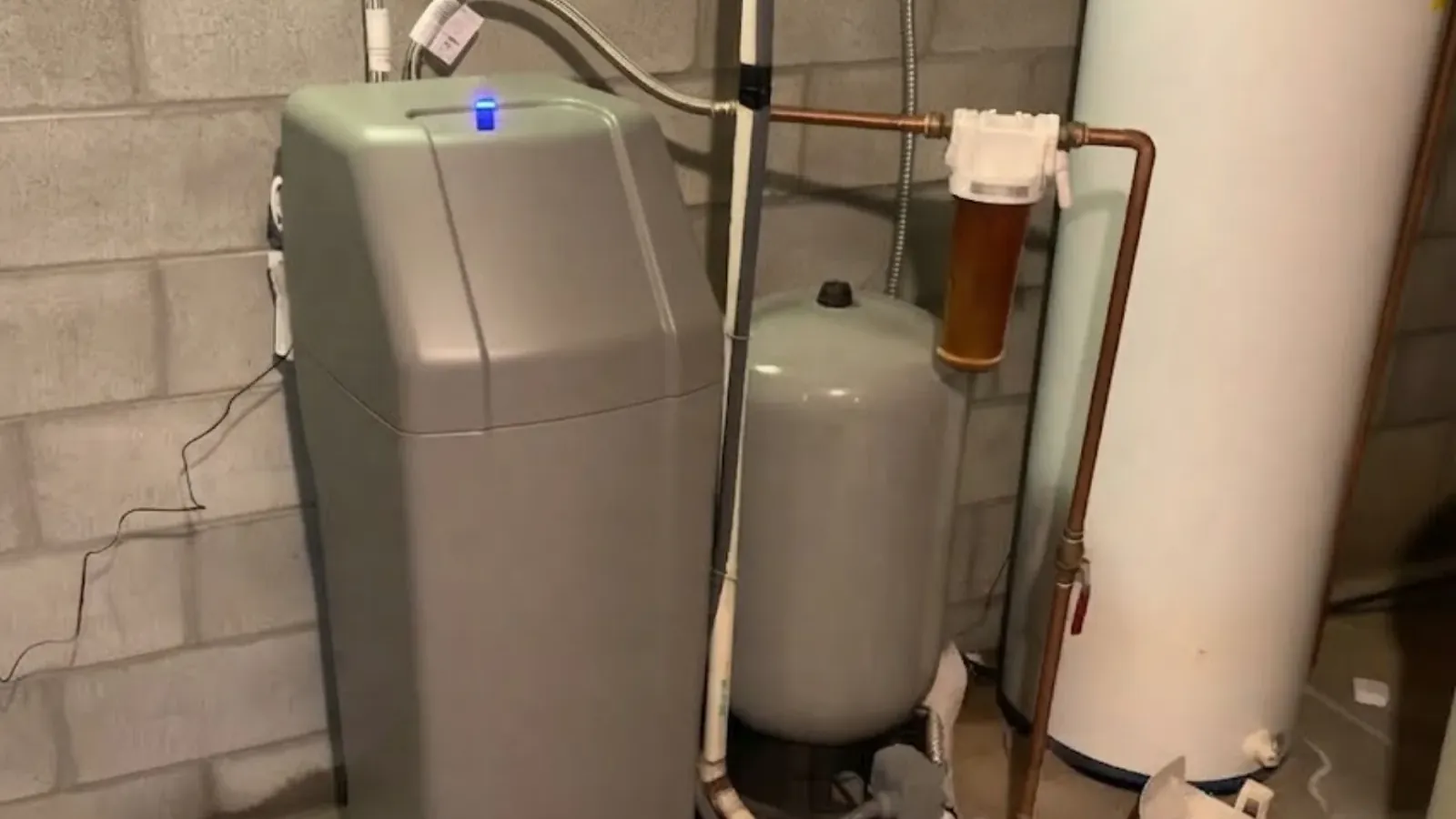
What 26 Grains Per Gallon Means for Your Home
Hardness is dissolved calcium and magnesium. At 26 grains per gallon, a household can see crusty fixtures, spotty dishes, dry skin and soap that will not lather. Inside the pipes, scale narrows lines and coats heating elements, which wastes energy.
The City report states that a water softener is very important to improving the water's aesthetics. Iron and manganese are removed at the City plant, so the main job is hardness.
White crust on fixtures
Scale forms where water evaporates.
Spotty glassware
Hard water leaves mineral spots.
Short-lived water heater
Scale on the tank floor and elements.
Stiff laundry
Soap does not rinse out well.
Clogged shower heads
Scale blocks the holes.
Softener, Filter or Both
| System | Does | Does not |
|---|---|---|
| Salt-based softener | Removes hardness | Remove chlorine or taste |
| Carbon filter | Improves taste and odor | Soften water |
| Reverse osmosis | Filters drinking water | Treat whole house |
| Softener plus filter | Soft, clean water | Replace regular maintenance |
Test and size
We size by household and hardness.
Permit
The City requires a plumbing permit for water softener replacement or installation.
Install
Bypass, drain, brine tank and power.
Set up
Program regeneration and show you how to add salt.
How We Size a Softener for Your Household
Sizing is simple arithmetic. Multiply the number of people by about 75 gallons of daily use, then by the water hardness in grains. Four people using 75 gallons each at 26 grains per gallon need to remove about 7,800 grains a day, or roughly 55,000 grains between weekly regenerations.
A unit that is too small regenerates too often and wastes salt and water. A unit that is far too large can let water sit and go stale. We size so that regeneration happens about once a week.
Salt, Water and Drain Needs
A softener needs a nearby drain for its regeneration discharge, a power outlet for the controller and space for the brine tank. The brine drains to the house sewer, and the install includes an air gap so wastewater cannot siphon back.
We also fit a bypass valve, so you can shut off softened water to the outdoor taps, since lawns and gardens do not need it.
Ready to soften your water?
Call and tell us your household size. We will size a system and give a price.
Water Softener Installation Cost
Softener installation commonly runs from about $1,000 to $3,500 in typical US pricing, depending on the system and plumbing. Salt and periodic service are ongoing costs. What affects price:
Softener installs are not insurance claims. Many owners see lower appliance wear and cleaner fixtures over time, but we do not promise savings figures.
Permits and Reverse Osmosis in Chaska
The City of Chaska requires a plumbing permit for water softener installation or replacement. Reverse osmosis systems are exempt from the permit requirement.
Seven City wells draw from several aquifers at depths of 333 to 817 feet. Because hard water reaches your tap, a softener on the home's main water line protects everything downstream. See tankless water heater for how scale affects heaters.
Softener drains need an air gap under the Uniform Plumbing Code (UPC) that Minnesota's plumbing code follows, so brine discharge cannot siphon back into the supply.
Source: City of Chaska 2025 Drinking Water Report and plumbing permit information.
Water Softener Installation Questions in Chaska
Softener installs are planned work. For a leaking softener or a burst line, our 24/7 line can help stop the water.
The City's 2025 drinking water report lists 26 grains per gallon.
Yes. Chaska requires a plumbing permit for softener installation or replacement. Reverse osmosis systems are exempt.
Softening adds a small amount of sodium. People on a low-sodium diet may prefer an RO tap for drinking. Talk to your doctor.
Depends on size and use. Check monthly at first.
It reduces scale buildup, which is a leading cause of heater failure in hard water.