
What Soap Does Inside a Pipe
Dish soap breaks up grease so it can wash away. If the water is hot and plentiful, the grease travels down the line with the soap. If the water is cool or the flow is slow, the emulsified grease can cool and cling to the pipe wall again.
Over months, that film traps food scraps, coffee grounds and hair, and the pipe narrows until the sink drains slowly or stops.
Hard Water Turns Soap Into Scum
Calcium and magnesium in hard water react with soap to form a sticky curd, often called soap scum. It does not dissolve easily, and it sticks to rough pipe walls and traps.
That is why households with hard water often have slow drains even when they do not use much soap. The soap itself is not the clog. The scum it makes is.
| What goes down | What it does in the pipe | Result |
|---|---|---|
| Grease and cooking oil | Cools and coats the wall | Narrowing, slow drain |
| Soap in hard water | Forms scum | Sticky film that traps debris |
| Coffee grounds | Settle in low spots | Dense plug |
| Food scraps | Catch on the film | Full blockage |
| Hair (bath sinks) | Wraps around scum | Tangled clog |
Sink drains slowly after a meal
Film is already thick enough to slow the flow.
Gurgling after the sink empties
Air is pulling past a partial blockage.
Smell from the drain
Decaying food and grease in the trap.
Two fixtures slow together
The blockage is further down the line.
How Much Soap Is Too Much
More soap does not clean better. Excess detergent in a dishwasher or washing machine makes suds that foam out of drains and leave residue on pipe walls. Follow the dosing on the label, and use less if your water is soft or your loads are small.
If you see suds coming up from a floor drain or standpipe, a partial blockage downstream is slowing the flow.
Dishwasher and Disposal Drains
The dishwasher drains through the same trap as the sink. A film in that shared line can slow both. Run the disposal with plenty of cold water to flush food, then run the dishwasher on its hottest cycle to rinse the line.
If the dishwasher leaves standing water, check the filter and the drain hose before assuming a pipe problem.
When the Kitchen Is Not the Problem
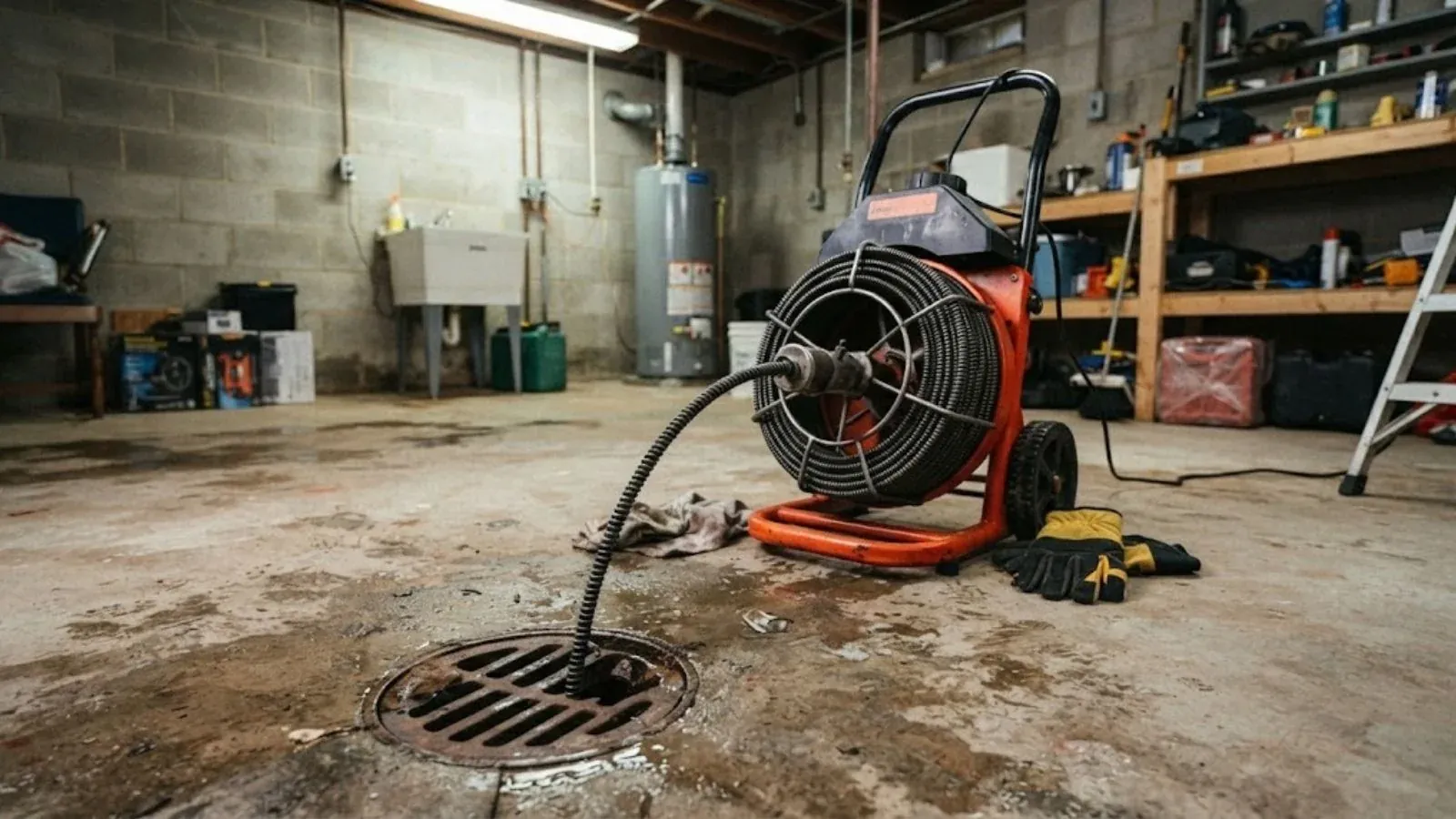
If the kitchen sink is slow, but so is the laundry and a bathroom, the blockage is in the branch or the main line. A cable through the main cleanout clears it, and a camera shows what caused it.
Gurgling in a floor drain when the kitchen sink empties is a classic sign.
A Simple Monthly Habit That Keeps Drains Moving
Once a month, run hot tap water for a minute after the sink has been used for greasy dishes. Wipe pans with a paper towel before washing so the grease goes in the trash, not the drain.
These steps cost nothing and cut the buildup that eventually needs a cable. If the sink already drains slowly, the habit will not clear it, and a cleaning is the next step.
Sink backed up?
Call and describe it. We will tell you what we would do and the price first.
What You Can Do Yourself
Flush with hot water
Run the hottest tap for a minute after each use to carry grease along.
Use a plunger
Seal the other bowl and plunge firmly for 20 seconds.
Clean the trap
Put a bucket under the P-trap, unscrew the nuts and clear what is inside.
Skip chemical cleaners
They stall in a full pipe, can harm older pipes and burn skin.
Try a drain snake
A small hand auger can clear the trap arm.
When to Call
If the sink still drains slowly after a plunger and a clean trap, the buildup is further down. A cable through the line clears the blockage, and if the drain keeps coming back, hydro jetting scours the pipe wall clean.
A drain that clogs more than once a year is a sign of buildup or a pipe defect, and a camera look settles which.
Habits That Keep Kitchen Drains Clear
Wipe greasy pans first
Use a paper towel and put it in the trash.
Pour cooled fat into a can
Never down the drain.
Use a drain strainer
It catches food scraps.
Run hot water after washing
A minute of hot water helps carry soap and grease away.
We clear kitchen drains in Chaska, Chanhassen and Victoria. If hard water is part of the problem, a water softener cuts the scum at its source.
Chaska's Hard Water and Where Your Drain Water Goes
The City of Chaska's 2025 drinking water report lists its water at 26 grains per gallon, which is hard. Soap reacts with those minerals, and that is why soap scum is a common cause of slow drains in the area.
Wastewater from Chaska flows through a Metropolitan Council lift station to the Blue Lake Wastewater Treatment Facility in Shakopee, so grease that leaves your pipe can still cause trouble in the sewer system. The sewer service line on your property is the owner's responsibility.
Under the Uniform Plumbing Code (UPC) that Minnesota's plumbing code follows, every fixture needs a trap and a vent, which is why a gurgling sink points to a venting or blockage problem.
Source: City of Chaska 2025 Drinking Water Report and sewer service line guidance.
Questions Chaska Homeowners Ask
Rarely. Problems come from soap mixed with grease, food and hard water minerals.
Hot tap water is fine. Boiling water can soften PVC joints and crack porcelain, so avoid it.
They can help with light organic buildup over time, but they do not clear a blocked pipe.
Film remains on the wall, or something in the pipe, like a belly, holds debris.
If you cook with a lot of grease, a yearly cleaning is reasonable. Otherwise, clean when it slows.
Yes. Less hardness means less soap scum.